August 21, 2026 · GOURDS SHOP
From Harvest to Shelf: How Bottle Gourds Are Cured and Finished
Follow the path from harvest to finished wholesale décor — curing, sanding, carving, sealing — and why rushed drying creates claims later.
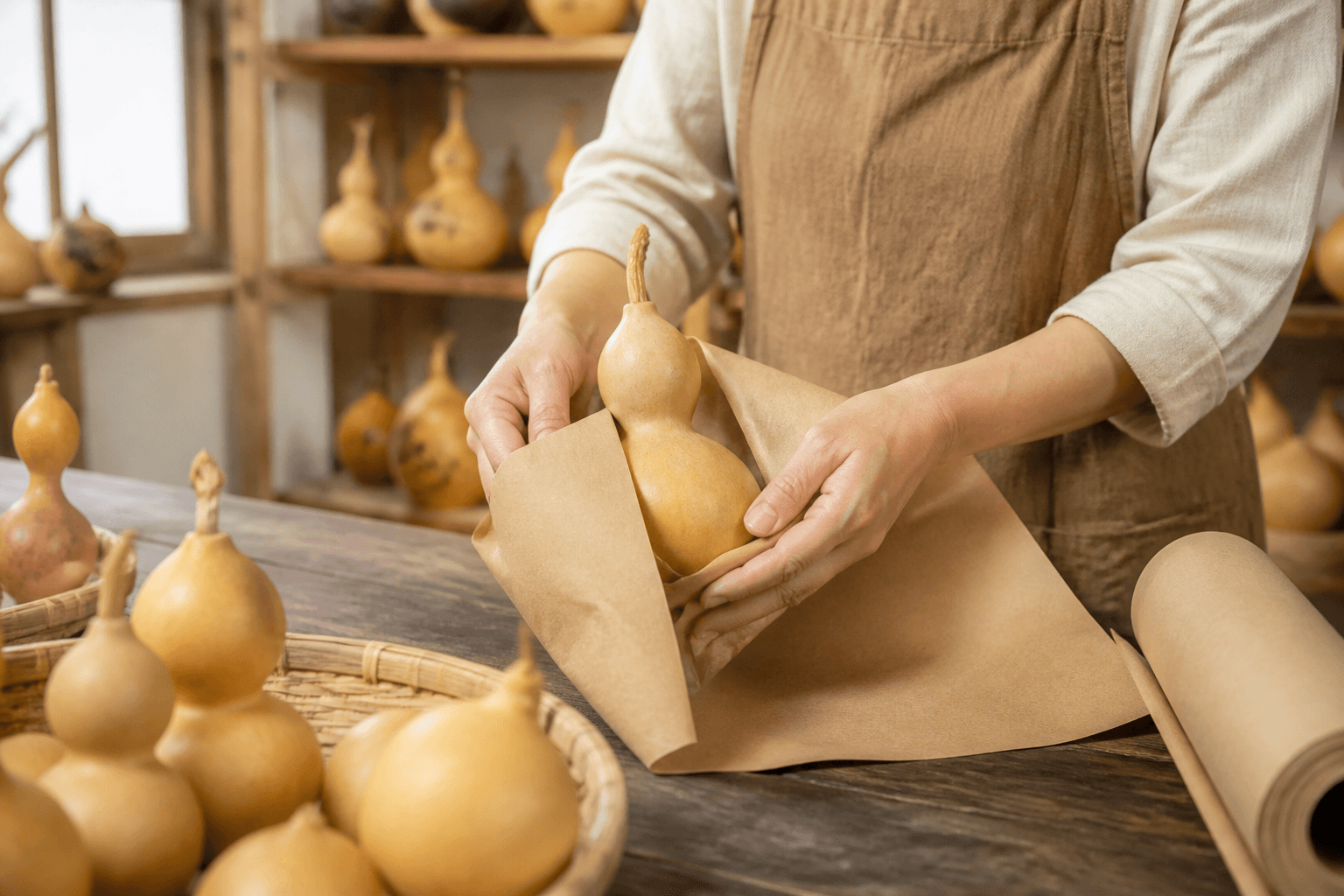
A finished gourd décor piece is only as stable as its curing. Workshops in Shandong treat drying as a production step, not a delay.
After harvest, shells are cleaned and left to dry until the inner pith loosens and moisture equalizes. Rushing this stage with high heat can crack walls or leave soft spots that fail months later in a heated store. Experienced makers listen for a hard, even tap and check weight before sanding.
Sanding opens the surface for oil, wax, or lacquer. Carving and inlay come next on thicker shells. Sealing locks dust and protects against humidity swings during ocean freight. Each step needs the previous one to be complete — you cannot lacquer a shell that is still shedding moisture.
For buyers, process transparency reduces claims. Request notes on cure duration, finish type, and recommended indoor humidity range. Display gourds away from direct HVAC blasts when possible; extreme dryness can stress even well-cured shells.
When a supplier can explain harvest windows and finish chemistry in plain language, you are talking to a workshop — not a trading desk assembling random stock photos.